
Denture Adhesive: How to Use It (and Do You Really Need It?)
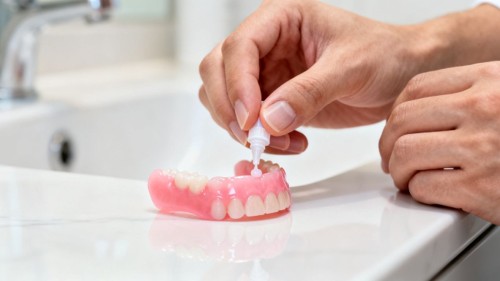
Denture adhesive is a paste, powder, or pad placed on a denture to help it stay in place. It can improve retention and reduce the amount of food that slips beneath a well-fitting denture, but it cannot correct a denture that's badly loose or poorly shaped — think of it as extra support, not a substitute for a proper dental fit. At Lakeside Dental in Moses Lake, our doctors help patients figure out when adhesive is genuinely helpful and when it's masking a fit problem that needs attention.
How to Apply Denture Adhesive Correctly
Start by rinsing and cleaning the denture, then dry it thoroughly. Moisture can make the adhesive spread unpredictably, while a dry surface helps you judge how much you're using. Apply a few short strips or small dots to the inner surface, keeping the adhesive away from the edges so it doesn't squeeze out when you bite down.
Place the denture in your mouth and press it gently into position. Bite down for a few seconds to help it settle, and avoid adding more adhesive simply because the first application feels unfamiliar — a small amount is usually enough for the added grip you want. At the end of the day, remove the denture and clean both the appliance and your mouth. Ask our Dentures team for personalized advice if you're unsure how often to use adhesive or how to clean away residue.
Best Denture Adhesive for a Tight Seal
The best denture adhesive for a tight seal depends less on a universal ranking and more on the denture, the wearer's routine, and personal comfort. Creams, powders, and strips can all provide added retention when used with a reasonably well-fitting denture. The right choice should feel secure without creating a thick, sticky layer or making removal difficult.
| Type | Useful Feature | Possible Drawback |
|---|---|---|
| Cream | Easy to place in small amounts | Can ooze if overapplied |
| Powder | Thin, light layer | May be harder to spread evenly |
| Strips | Convenient, pre-formed application | May require trimming or careful placement |
No format is automatically best for every person. If one type feels bulky, leaves excess residue, or doesn't provide comfortable retention, discuss alternatives with a dentist rather than repeatedly increasing the amount. A secure seal shouldn't come at the expense of a clean, comfortable mouth.
Denture Adhesive Side Effects
Denture adhesive side effects are more likely to become a concern when the product is used excessively, left in place, or applied to a denture that needs professional adjustment. Residue can irritate the mouth, and too much adhesive may ooze around the edges and affect comfort. Read the label carefully, especially if the product contains zinc or if you also take supplements that contain zinc.
Using too much adhesive usually creates a messy, uncomfortable layer rather than a stronger hold. It may squeeze out around the denture, collect food, alter the way you bite, and make cleaning more difficult. If you need large amounts to keep the denture in place, that's a useful reason to arrange a dental checkup. A few habits can help keep use more controlled:
- Clean and dry the denture before each application
- Begin with the smallest amount recommended on the label
- Remove adhesive residue daily instead of layering new product over old residue
- Check the label for ingredients and follow its maximum-use directions
Watch for changes that don't feel like ordinary adhesive residue, including persistent soreness, burning, swelling, numbness, or tingling. Stop and seek professional advice if symptoms continue, and contact a clinician promptly about unusual nerve symptoms or a significant reaction.
Do You Really Need Denture Adhesive?
Many people with properly fitted and maintained dentures don't need adhesive every day. Others find it useful for extra confidence, speaking, eating, or occasional situations where additional retention is helpful. Needing adhesive isn't automatically a sign that something is wrong, but a sudden change in how much you need deserves attention.
A denture may need adjustment, relining, or replacement if it rocks while you chew, repeatedly causes sore spots, slips despite careful application, or has become uncomfortable after fitting well in the past. Changes in the mouth over time can affect how an older denture rests, so simply adding more adhesive may only hide the underlying issue. Do not try to reshape the denture yourself; an uneven alteration can create new pressure points. Pay attention to patterns rather than one isolated meal, and schedule an appointment at our Moses Lake office if the denture moves every day, affects your speech, or makes eating certain foods difficult.
Tips for a Comfortable, Secure Fit
Clean your denture and mouth regularly, and give the denture a careful rinse before applying anything. Keeping the appliance dry when the instructions call for a dry surface makes application more predictable. It's also worth removing the denture at night unless your dental professional has given you different instructions.
Use comfort as your guide, not just staying power. A denture that grips firmly but causes sore gums, changes your bite, or leaves persistent residue isn't functioning well for you. According to MouthHealthy, the American Dental Association's consumer resource, denture wearers who use adhesives should read and follow the instructions exactly as directed, and a dentist can recommend appropriate cleansers and adhesives — products carrying the ADA Seal of Acceptance have been evaluated for safety and effectiveness. Keep routine dental appointments even when the adhesive seems to be working, since the shape of the mouth can change over time.
Conclusion
Denture adhesive can add useful retention to a well-fitting denture when you apply a small amount to a clean, dry surface and remove the residue regularly. It's not a replacement for an adjustment, relining, or new denture when the fit has changed. If comfort or stability keeps declining, you can contact our Moses Lake office for an evaluation.
Frequently Asked Questions
Is denture adhesive necessary for everyone?
No. Many people with well-fitting dentures do not need adhesive, while others prefer extra support for comfort or confidence. The choice depends on the fit, the denture type, and advice from a dental professional.
How much denture adhesive should I use?
Use the smallest amount that provides comfortable retention and follow the product label. If you need a large amount or reapply repeatedly during the day, ask a dentist to check the fit.
Can I apply adhesive to a wet denture?
Some products are designed for a damp surface, while others work best on a clean, dry denture. Check the instructions for your specific product rather than guessing.
How do I remove denture adhesive?
Remove the denture gently, then clean the appliance and rinse or brush the mouth to remove residue. Use the cleaning method recommended for the denture material and adhesive.
Can denture adhesive fix loose dentures?
It may provide temporary extra retention, but it cannot correct a significant fit problem. Loose dentures may need an adjustment, relining, or replacement.
What are common denture adhesive side effects?
Excess adhesive can cause sticky residue, oozing, discomfort, and more difficult cleaning. Persistent soreness, irritation, numbness, tingling, or swelling should be discussed with a healthcare professional.
About the Author
Lakeside Dental is located at 1708 Clover Drive, Moses Lake, Washington. The practice is led by Dr. Brad Sorenson, DMD, Dr. Levi Miller, DMD, and Dr. Brad Earl, DDS. Dr. Sorenson graduated Magna Cum Laude with his Doctorate of Dental Medicine from the University of Louisville, Dr. Miller earned his Doctorate of Dental Medicine from Temple University School of Dentistry, and Dr. Earl received his Doctorate of Dental Medicine from Midwestern University with advanced training in implants, endodontics, and oral surgery. All three doctors are members of the American Dental Association, the Washington State Dental Association, and the Grant County Dental Association.
Medical Disclaimer
The information provided in this article is for educational purposes only and does not constitute professional medical or dental advice, diagnosis, or treatment. Whether your dentures need adjustment or replacement can only be determined through an in-person dental examination. Always seek the advice of your dentist or other qualified health provider with any questions regarding denture care. Never disregard professional advice or delay in seeking it because of something you have read here.
Blog Post Author

Office Manager