
How to Care for Your Dentures: A Daily Maintenance Guide
Build a Daily Denture Care Routine
A simple routine makes denture care easier to remember and helps prevent small problems from becoming uncomfortable ones. Rinse, clean, and store your dentures consistently rather than waiting until they look dirty. If you are learning how to care for dentures, start with gentle habits that protect both the appliance and your mouth.
Rinse Dentures After Eating and Drinking
Food can collect beneath a denture or around the teeth and clasps of a partial. After eating or drinking, remove the denture when practical and rinse it with lukewarm water over a basin or folded towel. This loosens particles before they dry and become harder to remove.
A quick rinse is useful during the day, but it does not replace brushing. Be cautious in public restrooms or over a hard floor, where a dropped denture can crack or break.
Brush Dentures With the Right Tools
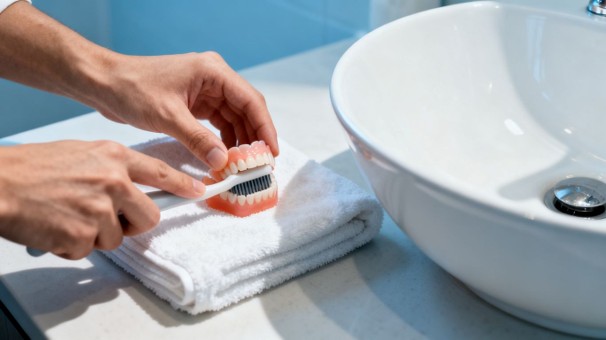
Brush dentures at least once a day with a soft denture brush or another soft brush recommended by your dental professional. Clean every surface, including the teeth, inner side, and areas that touch your gums. Use a gentle cleanser intended for dentures rather than scrubbing aggressively.
A calm, consistent technique is better than pressure. Hold the denture securely, brush over a towel or a sink partly filled with water, and take your time around curves and attachments.
Clean Your Mouth, Gums, Tongue, and Palate
Denture care includes the tissues that support the appliance. After removing your dentures, gently brush your gums, tongue, palate, and any remaining natural teeth with a soft toothbrush. This removes residue and gives you a chance to notice soreness, redness, or a change in texture.
Rinsing your mouth with water can also leave it feeling fresher. If your dental professional has recommended a particular mouth rinse or cleaning method, follow that advice rather than adding harsh products on your own.
Handle Dentures Carefully to Prevent Drops and Damage
Dentures are easier to manage when you handle them with both hands and keep them close to a safe surface. Avoid bending a partial denture or forcing it into place. Gentle handling protects fit and reduces the chance of damaging delicate areas.
When removing a denture, loosen it slowly instead of pulling sharply. Keep it away from pets, children, and hot surfaces, and place it somewhere predictable whenever it is not in your mouth.
Clean Dentures Without Causing Damage
Cleaning should remove plaque and residue without scratching the denture surface or changing its shape. The safest approach is usually gentle brushing, a denture-appropriate cleanser, and water at a mild temperature.
A soft denture brush can reach the contours of the appliance without the harsh friction of stiff bristles. Apply a cleanser labeled for denture use and brush over all sides, including the underside that rests against your gums. Rinse the brush after use and let it dry between cleanings. If you are unsure whether a product is suitable, ask a dentist or pharmacist before using it.
Many ordinary toothpastes are designed to polish natural enamel and may be too abrasive for denture materials. Scouring powders, whitening products, bleach, and rough household cleaners can also scratch or discolor the surface. Choose a product made for dentures and use a light touch.
Hot or boiling water can alter the shape of some dentures and may affect how they fit. Use cool or lukewarm water for rinsing, brushing, and preparing a soaking solution. Test the water with your hand before placing the appliance in it.
Residue often gathers along the gum-facing surface, between denture teeth, around clasps, and in small grooves. Angle the brush so its bristles reach these areas without forcing them into narrow spaces. If buildup remains despite careful cleaning, a professional cleaning may be safer than scraping it with a sharp object.
Soak Dentures Safely Overnight
Many people remove their dentures at night, giving the mouth a period without the appliance and making cleaning easier. During that time, dentures should be stored according to the material and the instructions provided for them.
Read the directions on any denture-soaking product before using it. Use the recommended amount, observe the stated soaking time, and do not combine products unless a dental professional specifically tells you to do so.
Place dentures in a clean container with enough appropriate liquid to cover them completely. Partial exposure can allow sections to dry while other sections remain wet. Do not leave dentures loose in a pocket, tissue, or on a bedside table.
After soaking, rinse the dentures well under lukewarm running water before returning them to your mouth. This removes residual cleaning solution and any loosened debris. If the denture still has an unusual taste, film, or odor after rinsing, do not simply add more solution — review the product directions and seek professional advice if the issue continues.
Not every soaking product is suitable for every denture. Some appliances include metal parts, soft materials, or attachments that can be affected by particular chemicals. Never substitute household bleach, hot water, or an unapproved cleaning liquid for a denture product. A dentist can tell you which method fits your appliance, especially after a repair, reline, implant-related procedure, or change in denture material.
Care for Different Types of Dentures
Dentures do not all have the same shape, materials, or supporting structures. Full dentures, partial dentures, and implant-supported appliances can need different handling around their contact points. Follow the instructions provided for your specific appliance, even when a general cleaning habit seems harmless.
A full denture may have a broad gum-facing base, while a partial denture also has natural teeth, clasps, or other components to clean around. Brush both appliances thoroughly, but pay special attention to the spaces where a partial meets natural teeth and gums. Remove a partial denture carefully and clean the remaining teeth separately.
Metal clasps can bend if you twist, pull, or brush them with excessive force. Remove the partial along the path your dental professional showed you, then clean around the clasps without trying to reshape them. A clasp that suddenly feels tight or loose should be checked rather than adjusted.
Implant-supported dentures may have attachments that require precise cleaning and handling. Follow the care instructions from the dental team who placed or maintains the appliance, particularly around the attachment sites. Do not scrape, pry, or use an unapproved tool to remove buildup. If the denture does not seat as it normally does, remove it and contact the dental office for guidance.
Soft liners and recently relined dentures may need a gentler or more specific cleaning routine. Ask which brush, cleanser, and soaking method are appropriate before treating them like a standard acrylic appliance.
Prevent Common Denture Problems
Most denture problems are easier to address when noticed early. Daily cleaning reduces residue, while regular inspection can reveal a crack, rough edge, or change in fit. Pay attention to how the appliance feels, not just how it looks.
Rinse after meals, brush daily, and clean the mouth after removing the appliance. Avoid letting residue dry on the denture overnight, because hardened buildup can be more difficult to remove gently. Tobacco, strongly colored foods, and some drinks may contribute to staining, so mention persistent discoloration at a dental visit. A clean storage container matters too — wash it regularly, rinse it well, and allow it to dry.
Look over the denture whenever you clean it, especially after dropping it or noticing a new sensation in your mouth. A chip, crack, loose denture tooth, or rough edge can worsen with continued use. Use this quick visual check to keep the routine manageable:
- Look for visible cracks or chips
- Check whether any denture tooth moves
- Notice rough edges or sharp spots
- Compare the fit with how it normally feels
After the check, store the denture safely and arrange professional advice for anything unusual.
Glue, files, pliers, and household adhesives can damage the appliance or make a professional repair more difficult. If something breaks or feels wrong, stop trying to correct it yourself. Keep all pieces if a denture breaks and bring them to the dental office, and avoid wearing a damaged appliance if it causes pain or could injure your mouth.
Persistent looseness, rocking while chewing, clicking, sore spots, and repeated slipping may indicate a fit problem. Sores that do not settle, difficulty speaking that is new, or a sudden change in bite also deserve attention. Do not rely on increasing adhesive or tightening your own cleaning routine to solve a denture that no longer feels right — a dental professional can assess whether the appliance needs an adjustment, reline, repair, or replacement.
Keep Your Mouth Healthy While Wearing Dentures
A denture is only one part of oral care. The gums, tongue, palate, natural teeth, and supporting tissues still need regular attention. Build care around removal, cleaning, rest, and dental visits rather than wearing the appliance continuously without checks.
Follow your dental professional's guidance about removing dentures, commonly including a period overnight unless you have been told otherwise. Rest gives the tissues a break and lets you clean both the appliance and your mouth.
Rinse the storage container after emptying it and wash it regularly with mild soap and water unless your dental professional recommends another method.
Remove any film or residue, rinse thoroughly, and let it dry before using it again. Replace a cracked or persistently dirty container.
According to the American Dental Association's MouthHealthy resource on dentures, regular dental visits allow a professional to examine your mouth, assess the denture fit, and check natural teeth or implant-related areas, and can also identify buildup that home brushing has not removed. Bring the denture and its container to appointments when requested, and do not wait for a broken appliance before booking care.
Contact a dental professional if you have ongoing soreness, bleeding, swelling, numbness, mouth sores, or a burning feeling. Also seek advice when the denture repeatedly slips, causes difficulty chewing, or develops a sharp area. Describe when the symptom began and whether it appears during eating, speaking, or removal — that detail can help the dental team understand the problem and recommend the next step.
Conclusion
Good denture care is mostly a collection of gentle, repeatable habits: rinse after meals, brush with suitable tools, soak as directed, protect the appliance from heat and drops, and care for your mouth as well. Regular dental visits add another layer of protection by catching fit and health concerns early. Contact our Moses Lake office if you have questions about your denture care routine or would like an appointment.
Frequently Asked Questions
How often should dentures be cleaned?
Clean dentures at least daily, and rinse them after eating or drinking when possible. Your mouth should also be cleaned whenever the dentures are removed.
Can I use regular toothpaste on my dentures?
Regular toothpaste may be too abrasive for some denture materials. Use a cleanser intended for dentures or follow the product advice given by your dental professional.
Should dentures be soaked overnight?
Many dentures are stored in water or a recommended soaking solution when not being worn, but the correct method depends on the appliance. Follow the instructions for your denture and soaking product.
Is hot water safe for dentures?
Hot or boiling water can affect the shape of some dentures. Use cool or lukewarm water unless your dental professional gives you different instructions.
What should I do if my denture cracks?
Stop using it if it causes pain or could injure your mouth, keep all broken pieces, and contact a dental professional. Do not use household glue or try to file the denture yourself.
Why do my dentures suddenly feel loose?
A change in fit can result from denture wear, changes in the mouth, or a problem with an attachment or supporting tooth. Arrange a dental assessment instead of forcing the denture or relying on home adjustments.
How can I prevent denture odor?
Rinse after meals, brush the denture daily, clean your mouth, and wash the storage container regularly. Persistent odor despite careful cleaning should be discussed with a dental professional.
About the Author
Lakeside Dental is located at 1708 Clover Drive, Moses Lake, WA. The practice is led by Dr. Brad Sorenson, DMD, Dr. Levi Miller, DMD, and Dr. Brad Earl, DDS, all members of the American Dental Association and the Washington State Dental Association, providing comprehensive family and restorative dental care to patients throughout Moses Lake.
Disclaimer
The information provided in this article is for educational purposes only and does not constitute professional dental advice, diagnosis, or treatment recommendations. Your denture care routine should be tailored to your specific appliance in consultation with your dentist. Always consult your dentist with any questions regarding your treatment.
Blog Post Author

Office Manager