
Implant-Retained Overdentures: A Comfortable Alternative to Traditional Dentures
What Implant-Retained Overdentures Are
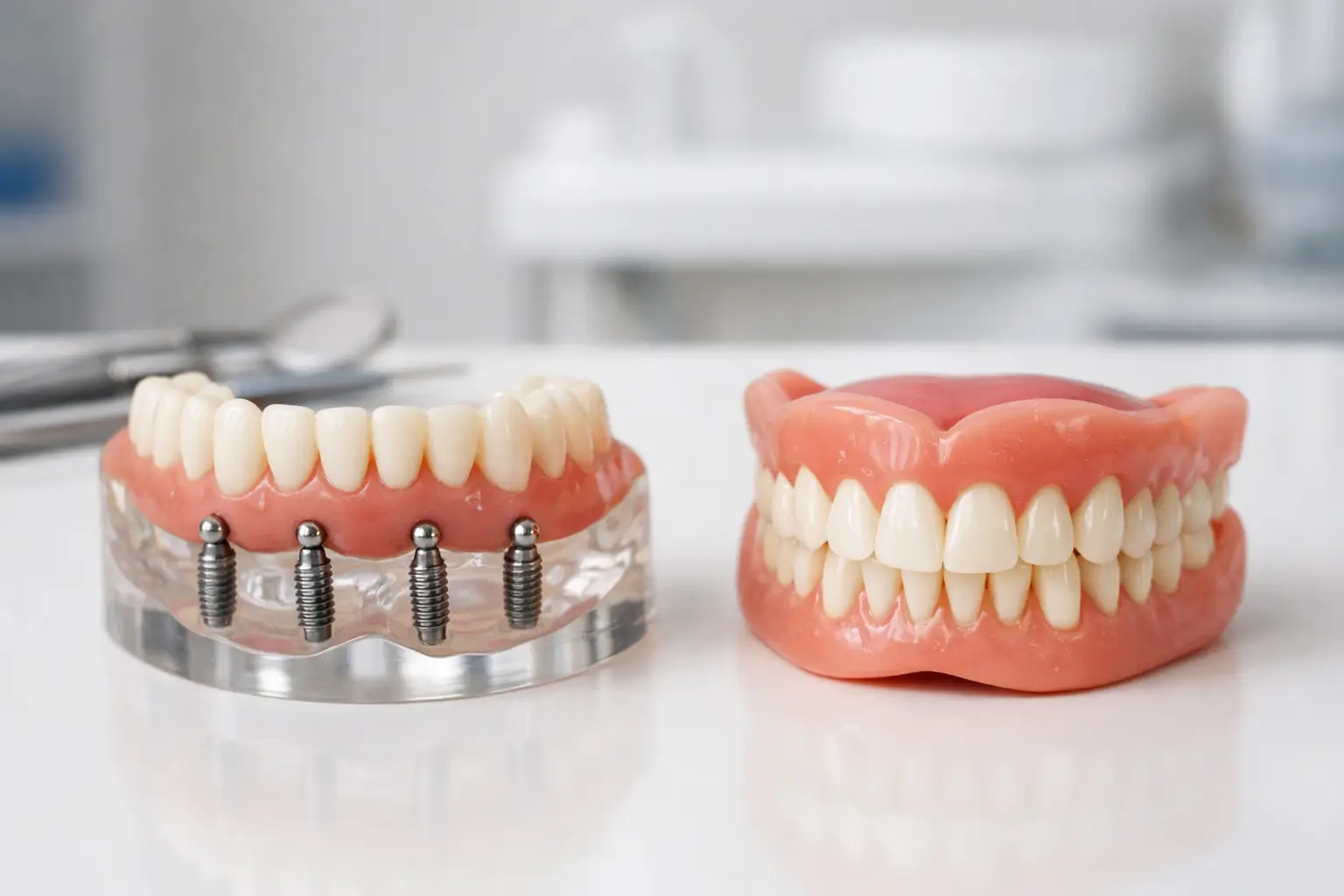
Implant-retained overdentures are removable dentures connected to dental implants placed in the jaw. The implants provide attachment points that help the denture stay more securely in position than a conventional denture resting only on the gums. The result is still a removable restoration, but one designed around greater retention and support.
How They Differ From Traditional Dentures
Traditional dentures rely mainly on the shape of the gums, suction, denture adhesives, and the fit of the base to remain in place. Implant-retained overdentures use small attachments connected to implants, so the denture is less likely to shift during ordinary movements.
Patients still remove the appliance for cleaning, but it does not simply rest passively on the soft tissues.
The difference can be especially noticeable while chewing or speaking. It does not mean the denture becomes completely immovable, and the quality of the result depends on the fit of the denture, the position of the implants, and the health of the surrounding tissues.
The Role of Dental Implants and Attachments
A dental implant is placed in the jawbone and acts as an anchoring point for the restoration. Once healing has taken place, an attachment system, such as a stud, locator-style attachment, or bar, connects the denture to the implants. The denture can then be snapped into place and removed when needed.
The attachments are mechanical parts, not a permanent bond, and may need periodic adjustment or replacement as they wear.
Implant-retained and implant-supported dentures are sometimes used interchangeably, although treatment plans can differ. An implant-retained overdenture is generally removable by the patient and receives retention from the implants, while an implant-supported or fixed restoration may be designed to remain in place and transfer more of the chewing load through the implants and framework. The distinction matters when comparing cost, cleaning routines, surgical requirements, and daily convenience.
Why the Lower Jaw Often Benefits From Implant Retention
Lower conventional dentures can be challenging because the lower jaw has a smaller supporting surface and the tongue and cheeks are constantly moving around the appliance. Even a carefully made denture may lift or slide when a person talks, laughs, or chews. Implants can give the lower denture defined points of retention, though the denture still needs an accurate fit and the soft tissues may remain sensitive during the early period.
Why Patients Choose Implant-Retained Overdentures
People often consider implant-retained overdentures after finding that conventional dentures move more than they expected. The attraction is practical: a removable appliance with more dependable retention can make ordinary activities feel less complicated.
Implant attachments can limit the rocking and lifting that occur when a denture rests only on the gums, which may help a person bite into softer foods, chew with fewer interruptions, and speak without repeatedly repositioning the appliance.
A denture that shifts can rub the gums and create recurring pressure points, and better retention may reduce some of that movement, although it cannot compensate for a poorly fitting or worn denture. Some people also become preoccupied with whether their denture will loosen while speaking or eating with others, and a more secure fit may make these moments feel less distracting.
Natural tooth roots stimulate the surrounding bone, and tooth loss is followed by changes in the shape and volume of the jaw. Implants may provide some functional stimulation to the bone around them, but the extent of preservation varies by person and implant location, and they do not restore every area of bone lost before treatment.
What Overdentures Cannot Fix on Their Own
Implant retention does not cure gum disease, replace missing bone everywhere, or guarantee a comfortable bite. It also cannot make a denture immune to fracture, staining, wear, or poor hygiene. A realistic plan addresses how firmly the denture should stay in place, how easily the patient can remove and clean it, how the bite and appearance should be refined, and how future maintenance will be handled. Implants improve retention, but they are not a substitute for careful denture design and follow-up.
Who May Be a Good Candidate
Candidacy is determined through an examination rather than by age or by the desire for a more secure denture alone. The dental team evaluates the jawbone, gums, remaining teeth, general health, medications, and expectations. Implants need adequate bone for their planned position and must be surrounded by healthy tissues, and imaging helps the clinician judge bone height, width, and the location of nearby structures.
Patients may arrive with remaining teeth that are failing, heavily restored, or affected by gum disease, and the team must decide whether any teeth can be predictably retained or whether extractions are part of the plan.
A medical history should include conditions that affect healing, bleeding, bone metabolism, or immune function, along with medications, tobacco use, alcohol intake, and diabetes control. If the available bone is too narrow, short, or irregular for the planned implants, grafting or another preparatory procedure may be discussed.
What the Treatment Process Involves
Treatment usually unfolds in stages: diagnosis, any needed extractions or tissue treatment, implant placement, healing, denture design, attachment connection, and follow-up adjustments. The first stage includes a conversation about the current denture, chewing concerns, comfort, and desired stability, along with imaging to assess the bone and nearby anatomy.
Implant placement is a surgical procedure performed after the health and anatomy of the site have been reviewed, and the implants then require time to heal and integrate with the surrounding bone.
Once the implants are ready, attachment components are connected and the denture is fitted over them, with checks for seating, retention, occlusion, and comfort. Many patients need a temporary denture during extraction and healing stages, and the overall timeline ranges from several months to longer depending on extractions, grafting, and laboratory work.
What Wearing Implant-Retained Overdentures Feels Like
The first days and weeks involve learning a new set of movements, since the denture is retained at specific points rather than settling the same way as a conventional appliance. At first, the denture can feel unusually firm, and the bite may feel different, particularly if the final denture replaces an older appliance with worn teeth. Improved retention can make eating more manageable, but chewing should progress gradually, beginning with softer foods cut into small pieces.
Changes in denture shape, tooth position, or thickness can affect pronunciation temporarily, and reading aloud or speaking slowly can help the tongue adapt. Tender spots are common enough during adjustment that patients should know how to report them rather than repeatedly filing or altering the denture at home. Contact the dental office if pain is persistent, swelling increases, bleeding does not settle as instructed, or an implant or attachment feels loose.
Costs, Maintenance, and Expected Lifespan
The price of implant-retained overdentures depends on the whole treatment: examinations, imaging, extractions, grafting, surgery, the denture, attachment components, temporary appliances, and follow-up visits may all be included in the estimate.
The number and type of implants, the condition of the jawbone, and whether a new denture is required can substantially change the fee, so a useful estimate separates surgical, restorative, laboratory, and maintenance charges.
According to the American Dental Association's MouthHealthy resource on dentures, an overdenture fits over a small number of remaining natural teeth or implants to help preserve the jawbone and provide added stability and support. Dental insurance and payment options may cover some portions of treatment and exclude others, so patients should ask for a pre-treatment estimate rather than assuming full coverage.
The denture should be removed and cleaned according to the dental team's instructions, and the implant areas and attachment components also need careful daily cleaning since food debris and plaque can collect around them. Retention components can wear with repeated insertion and removal, and a denture may begin to feel loose even when the implants themselves are healthy because a clip, housing, or liner has lost resilience. Routine visits allow the clinician to inspect the gums, implants, attachments, bite, and denture base before small issues become larger problems.
How to Decide Whether They Are Right for You
Choosing implant-retained overdentures is a personal decision that combines clinical findings with practical preferences. Some patients value removability and easier cleaning, while others prioritize a fixed restoration. Useful questions for a consultation include which restoration type fits your bone, gums, bite, and daily needs; whether your current denture can be used or modified during treatment; what procedures, visits, and healing periods are expected; and which costs are included versus billed later.
A removable overdenture can usually be taken out for cleaning and may require fewer implants or less extensive preparation than some fixed full-arch approaches, while a fixed restoration stays in place and may feel more like a permanent set of teeth, though cleaning beneath it can require specialized techniques. Implant treatment can involve infection, inflammation, surgical complications, failure of integration, attachment wear, denture fracture, and changes in fit, and a clinician should explain the risks relevant to your case.
Conclusion
Implant-retained overdentures can offer a middle ground between a conventional removable denture and a fixed implant restoration. They may provide improved retention while remaining removable for cleaning, but candidacy, design, healing, maintenance, and cost all deserve careful discussion. Contact our Moses Lake office to schedule a consultation and find out whether this approach fits your mouth and daily routine.
Frequently Asked Questions
Are implant-retained overdentures removable?
Yes. They are designed to be removed by the patient for cleaning and are held in place during use by attachments connected to dental implants.
How many implants are needed for an overdenture?
The number varies according to the arch, bone anatomy, restoration design, and treatment goals. The clinician determines the appropriate number after examination and imaging.
Can an existing denture be converted into an overdenture?
Sometimes an existing denture can be modified, but its condition, fit, strength, and tooth position must be evaluated. A new denture may provide a better foundation for the attachments.
Do implant-retained overdentures feel like natural teeth?
They can feel more stable than conventional dentures, but they remain removable prostheses. Patients usually need time to adjust to their fit, bite, speech, and cleaning routine.
How should implant-retained overdentures be cleaned?
Remove and clean the denture as directed, and clean around the implants and attachments with suitable tools recommended based on the attachment design.
How long do implant-retained overdentures last?
The lifespan varies with materials, bite forces, hygiene, wear, and changes in the mouth. Attachment parts may need replacement before the denture itself, and regular checkups help identify those needs.
What should I do if my overdenture becomes loose or painful?
Contact the dental team for an evaluation rather than forcing the denture or altering it at home. Looseness or pain may come from a worn attachment, a pressure point, a bite change, or an issue involving the implant or surrounding tissue.
About the Author
Lakeside Dental is located at 1708 Clover Drive, Moses Lake, WA. The practice is led by Dr. Brad Sorenson, DMD, Dr. Levi Miller, DMD, and Dr. Brad Earl, DDS, all members of the American Dental Association and the Washington State Dental Association, providing comprehensive family and restorative dental care to patients throughout Moses Lake.
Disclaimer
The information provided in this article is for educational purposes only and does not constitute professional dental advice, diagnosis, or treatment recommendations. Whether implant-retained overdentures are appropriate for you can only be determined through an in-person evaluation. Always consult your dentist with any questions regarding your treatment.
Blog Post Author

Office Manager