
Invisalign vs Braces: Which Is Right for You
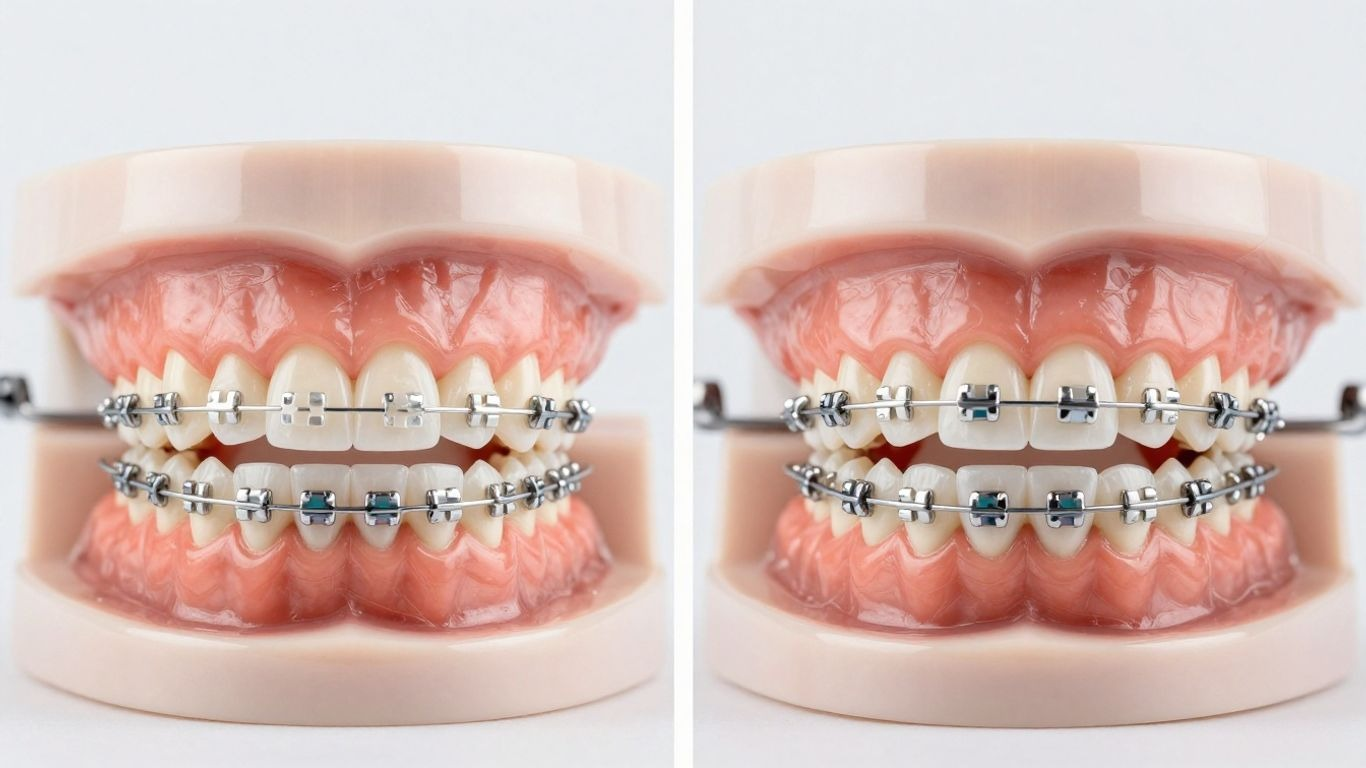
Invisalign vs Braces: Which Is Right for You?
Deciding whether to get Invisalign or braces can feel like a big choice, and honestly, it is! Both can give you that smile you've been dreaming of, but they work in pretty different ways. We're going to break down the main differences, look at the good and bad points of each, and help you figure out which one fits your life and your goals best. It's all about finding the right fit for you.
Things to Remember
- Both Invisalign and traditional braces are effective at straightening teeth, but they offer different experiences and have unique pros and cons.
- Invisalign uses clear, removable aligners that are nearly invisible, making them a popular choice for adults and teens who prioritize aesthetics.
- Traditional braces, with their brackets and wires, are often better suited for complex orthodontic issues and require less patient compliance.
- Treatment time can vary for both options, with Invisalign sometimes being faster for milder cases, while braces might be more efficient for severe misalignments.
- The best choice between Invisalign and braces depends on your specific orthodontic needs, lifestyle, budget, and a thorough discussion with your orthodontist.
Invisalign vs Braces: What's the Real Difference?
So, you're thinking about straightening your teeth, huh? Awesome! But then comes the big question: Invisalign or traditional braces? It's a common dilemma, and honestly, there's no single 'better' answer for everyone. Both methods are super effective at getting your teeth into their happy place, but they go about it in pretty different ways.
Traditional braces are the OG. Think metal brackets glued to your teeth, connected by wires and tiny rubber bands. Your orthodontist tightens these wires periodically, gently nudging your teeth into alignment. It's a tried-and-true method that works for a wide range of issues, especially the more complex ones. You can even pick fun colors for those rubber bands!
Invisalign, on the other hand, uses a series of clear, custom-made plastic aligners. You pop them in, wear them for a while, and then switch to the next set in the series. Each aligner applies a little pressure to move your teeth gradually. The biggest perk? They're practically invisible, and you can take them out to eat and brush your teeth.
Here's a quick rundown of how they stack up:
- How they work: Braces use brackets and wires; Invisalign uses removable clear trays.
- Appearance: Braces are noticeable; Invisalign is discreet.
- Eating: Braces mean saying goodbye to sticky or hard foods; Invisalign lets you eat whatever you want (just take the trays out first!).
- Cleaning: Brushing and flossing can be tricky with braces; it's much simpler with Invisalign.
The main difference boils down to the technology and how it fits into your daily life. While both aim for that perfect smile, the journey and the experience are quite distinct.
Ultimately, the choice between Invisalign vs braces really depends on your specific dental needs, your lifestyle, and what you're most comfortable with. Chatting with your orthodontist is key to figuring out which path leads to your best smile.
Which is better: Invisalign or traditional braces?
So, you're wondering, which is better: Invisalign or braces? It's a super common question, and honestly, there's no single 'better' answer that fits everyone. Both Invisalign and traditional braces are awesome at straightening teeth and fixing bite issues, but they go about it in pretty different ways, and that's where the choice really comes down to you.
Think about it like this: traditional braces are like the tried-and-true workhorse. They use brackets and wires that your orthodontist adjusts regularly. They're really good at tackling even the most complicated dental problems. On the flip side, Invisalign uses a series of clear, custom-made plastic aligners that you swap out every week or two. They're practically invisible and you can take them out, which is a big deal for a lot of people.
Here's a quick rundown of what makes them tick:
Traditional Braces:
- Pros: Super effective for complex cases, no need for patient discipline (they're always on!), and often a bit more budget-friendly.
- Cons: They're noticeable, can be uncomfortable, and make eating certain foods a no-go. Plus, keeping them clean takes extra effort.
Invisalign:
- Pros: Nearly invisible, comfortable to wear, and you can remove them for eating and cleaning. Many people find treatment times are a bit shorter too.
- Cons: Requires a lot of self-discipline to wear them 20-22 hours a day, might not be the best for really complex issues, and can sometimes cost a bit more.
Ultimately, the decision between Invisalign and braces really hinges on your specific dental needs, your lifestyle, and what you're most comfortable with. What works wonders for one person might not be the ideal fit for another.
So, when you're weighing Invisalign vs braces, think about what's most important to you. Are you all about discretion? Do you have a busy social life? Or are you dealing with a more involved orthodontic situation? Chatting with your orthodontist is the best next step to figure out which path leads to your perfect smile.
Clear Aligners vs Traditional Braces: Pros and Cons
So, you're trying to figure out the best way to get that straighter smile, and you've landed on the classic showdown: clear aligners versus traditional braces. Both can get the job done, but they go about it in pretty different ways, and each has its own set of good and not-so-good points.
Let's break down the clear aligners vs traditional braces situation.
Clear aligners, like Invisalign, are practically invisible, which is a huge win for anyone who's a bit self-conscious about their appearance. They're made of smooth plastic and you can take them out whenever you need to eat, drink, brush, or floss. This makes keeping your teeth clean and enjoying your favorite foods way easier. Plus, many people find them more comfortable because there are no wires or brackets to poke your cheeks.
On the flip side, clear aligners really depend on you to wear them for about 20-22 hours a day. If you're not great at remembering to put them back in after taking them out, your treatment could take longer or not work as well. They're also not always the best bet for really complicated bite issues or severe crowding.
Traditional braces, on the other hand, are the tried-and-true method. They're super effective, even for the most complex orthodontic problems. Once they're on, they just do their thing without you having to remember anything. They're also generally a bit cheaper than clear aligners.
But, let's be real, they're not exactly subtle. Those metal brackets and wires are pretty noticeable, and they can make brushing and flossing a bit of a chore. You'll also have to say goodbye to some of your favorite chewy or crunchy snacks for a while.
Here's a quick rundown:
- Clear Aligners (e.g., Invisalign):
- Pros: Nearly invisible, removable for eating and cleaning, generally more comfortable.
- Cons: Require strict compliance, may not be ideal for very complex cases, can be more expensive.
- Traditional Braces:
- Pros: Highly effective for all case types, no patient compliance needed (once on), often more affordable.
- Cons: Very visible, can cause mouth irritation, dietary restrictions, harder to clean around.
Ultimately, the choice between clear aligners and traditional braces often comes down to your specific dental needs, your lifestyle, and what you're most comfortable with. Talking to your orthodontist is key to figuring out which path will lead you to your best smile.
Invisalign Cost vs Braces: Which Is More Affordable?
When you're trying to figure out the best way to straighten your teeth, the cost is usually a big part of the puzzle. So, let's talk about Invisalign cost vs braces and see which one might be easier on your wallet.
Honestly, the price difference between Invisalign and traditional braces isn't as huge as you might think these days. Both can set you back a bit, but the final number really depends on a few things:
- How complex is your case? If you have really tricky alignment issues or bite problems, you might need more aligners or a longer treatment time, which can bump up the cost for Invisalign. Similarly, complex cases might need more adjustments with braces.
- How long will treatment take? Longer treatments generally mean higher costs, no matter which option you choose.
- Where do you live? Orthodontic prices can vary quite a bit depending on your geographic location.
Is Invisalign Treatment Right for Adults?
Yep, Invisalign is totally an option for adults! In fact, a lot of adults choose it because, well, it's pretty much invisible. You don't have to worry about feeling self-conscious at work or during social events. The aligners are custom-made from smooth plastic, so they're comfy and easy to pop in and out. This makes eating your favorite foods and keeping your teeth clean a breeze, which is a big plus for busy adults. Just remember, you've got to be disciplined about wearing them for about 20-22 hours a day for them to work their magic.
When Should You Choose Invisalign Over Braces?
- Discretion is key: If you're in a profession or social circle where you really don't want anything showing on your teeth, Invisalign is your best bet. They're virtually unnoticeable.
- You want fewer food restrictions: With Invisalign, you just take the aligners out to eat and drink (anything other than water, that is). No need to avoid sticky candies or popcorn!
- Easier cleaning routine: Taking out your aligners means you can brush and floss just like you normally would, which is super convenient.
- Mild to moderate alignment issues: While Invisalign has gotten really good, it's still best suited for less severe crowding or spacing problems. For really complex bite corrections, braces might still be the more effective route.
Invisalign vs Braces: Which Gives Better Results?
So, you're wondering which one actually gets the job done better – Invisalign or traditional braces? It's a super common question, and honestly, the answer isn't a simple "this one is always better." Both have their strengths, and what works best really depends on what's going on with your teeth and what you're looking for.
Think of it this way: traditional braces are like the seasoned veteran. They've been around forever and are seriously good at tackling pretty much any alignment issue, especially the really complex stuff.
- For complex cases: Traditional braces usually take the cake.
- For mild to moderate cases: Invisalign can be just as effective.
- Consistency is key: With Invisalign, you have to wear those aligners properly.
- The orthodontist's skill matters: Experience plays a huge role.
Ultimately, both Invisalign and braces are proven methods for achieving a straighter smile and better oral health.
So, what's the Verdict?
Alright, so we've talked about the nitty-gritty of Invisalign versus braces. It's not really a one-size-fits-all situation, is it? Whether you're leaning towards the nearly invisible aligners or the tried-and-true brackets and wires, the main thing is to chat with your orthodontist. They're the ones who can really look at your specific smile needs and lifestyle to point you in the right direction. Contact Lakeside Dental ML today to explore Invisalign and braces options and find the right orthodontic treatment for your smile.
Frequently Asked Questions
- What's the main difference between Invisalign and braces?
Invisalign uses clear, custom-made trays that you can remove to eat and clean your teeth. Braces use metal or ceramic brackets attached to your teeth, with wires that are adjusted by your orthodontist to move your teeth. - Are braces or Invisalign better for my smile?
Both can give you a great smile! Invisalign is often preferred for mild to moderate issues because it's less noticeable. Braces can be more effective for very complex problems and sometimes work faster because they are always on your teeth. - How long does treatment usually take?
Invisalign often takes about 12 to 18 months for simpler cases. Braces can take anywhere from 18 months to 3 years, depending on how complex your dental situation is. - Can I still eat normally with braces or Invisalign?
With Invisalign, you can take the trays out to eat whatever you like! With braces, you need to avoid sticky, hard, or chewy foods that could damage the brackets or wires. - Is Invisalign more comfortable than braces?
Many people find Invisalign more comfortable because the smooth plastic trays don't irritate their gums like metal brackets and wires sometimes can. However, you might feel some pressure when you switch to a new set of aligners. - Which treatment option is usually more expensive?
The cost can be quite similar, but sometimes Invisalign can be a bit more expensive than traditional braces. The final price depends on how complicated your treatment is and how long it takes.
Blog Post Author

Office Manager